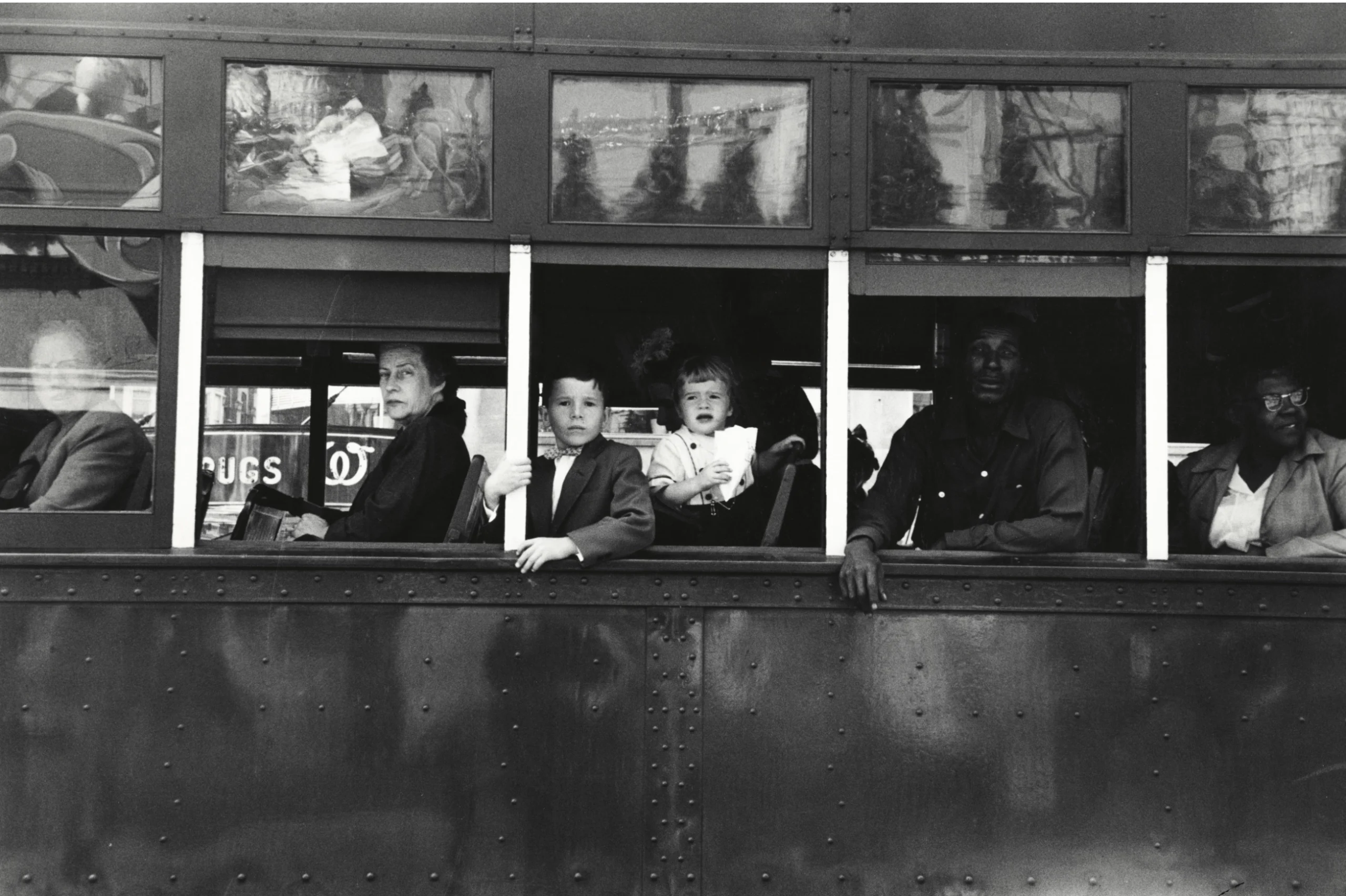
An exhibition that brings together the complete series of The Americans, the photographic project with which Robert Frank portrayed the inequalities, consumerism and social tensions of the United States in the mid-fifties. Iconic images that, published in 1958, made a profound impact for their honesty and their ability to show what many preferred to ignore.
DETAIL: Robert Frank. Tranvía. Nueva Orleans, 1955. Collection Maison Européenne de la Photographie, París © Robert Frank Foundation, from The Americans.

C/ Fuencarral, 3, Madrid
 planta


10:00 - 20:00
Sat, Sun and Hollidays:
11:00 - 20:00


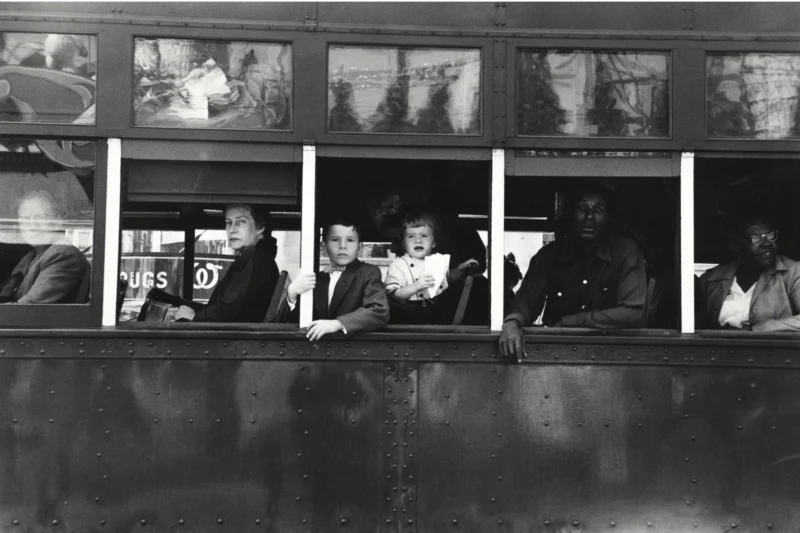
An exhibition that brings together the complete series of The Americans, the photographic project with which Robert Frank portrayed the inequalities, consumerism and social tensions of the United States in the mid-fifties. Iconic images that, published in 1958, made a profound impact for their honesty and their ability to show what many preferred to ignore.
DETAIL: Robert Frank. Tranvía. Nueva Orleans, 1955. Collection Maison Européenne de la Photographie, París © Robert Frank Foundation, from The Americans.
A pioneer in the renewal of photography as an artistic language, Robert Frank transformed forever the way we see the world through a camera. As part of the 29th edition of PHotoESPAÑA, the exhibition Robert Frank & The Americans, curated by David Campany and with the support of the Maison Européenne de la Photographie (Paris), offers a unique opportunity to rediscover one of the most influential photographic projects of the 20th century. A legendary—and still highly debated—statement on the United States and on photography itself, it continues to challenge new generations.
The journey that changed the history of photography
Born in Switzerland in 1924 and settling in the United States in 1947, Robert Frank undertook this project driven by the need to create his own narrative, independent of commercial commissions. Thanks to the support of two Guggenheim Foundation fellowships, he traveled the country on an extensive road trip over several years, traversing cities and landscapes in search of a deeper and more complex view of American society.
Far from the conventions of traditional documentary photography and the concept of the “decisive moment,” Frank developed a radically new aesthetic based on tilted frames, deliberate blurring, grain, and fragmentary or awkward compositions. Rather than recording the world in a clinical manner, Frank constructed a personal way of interpreting it, capturing what he called “in-between moments.”

A critical and poetic perspective
Throughout his journey, Frank’s initial optimism gave way to a deeply critical perspective. His images struck viewers with their honesty and raw honesty as they brought to light social inequalities, racial segregation, urban alienation, the obsession with money, and the impact of growing consumerism.
Frank took everyday symbols of American culture—such as cars, screens, lonely crowds, and the Stars and Stripes—and recoded them so that they felt tense, ambiguous, and unsettling rather than heroic or celebratory, achieving this through both visual poetry and social critique. As Frank himself stated in 1957, his intention was to portray a representative cross-section of the population in a simple way and from a strictly personal perspective, noting that “criticism can arise from love” and that what matters is “seeing what is invisible to others.”


From controversy to myth: its relevance today
The reception of The Americans upon its publication in 1958 was highly controversial; many critics labeled it “anti-American” and rejected an aesthetic that broke with the canons of “good photography.” However, time has reversed that assessment. While in the 1960s and 1970s it transformed the way new generations of photographers worked, today the work has evolved from being a countercultural statement to being regarded as an official historical record of a divided country. Today, seven decades later, Robert Frank’s images continue to challenge the viewer with the same intensity. Beyond its historical value, the exhibition presents itself as an open work that engages with our present in a context of social and political transformations, reminding us of the unresolved tensions in contemporary society.

What you’ll find in the exhibition
The original sequence: The exhibition displays the 83 images from the original book within the exhibition space, allowing for a spatial reading that strictly adheres to the exact sequence chosen by Frank.
Expanded context: Additional works by the photographer related to this project are included, along with several copies of different historical editions of the book, on loan from the International Center of Photography in New York and from private collections
The creative process: The exhibition is enriched with personal materials from the artist, including a map of his travel routes and a selection of enlarged contact sheets that reveal the repetition of motifs and the precision of his visual decisions
In collaboration with:

